


What's the deal with RocketRide? The best AI meta-harness
We have all heard of AI agent harnesses, but RocketRide's pitch is that they can do everything they do, and oh so much more

The state of AI Agent innovation, and where RocketRide fits in
Based on my conversations in San Francisco with fellow technology people, from founders to AI agency operators, I have been getting the impression that AI is more or less stabilizing in H2 of 2026 after going through a burst of rapid development these past couple years. In March 2025 we saw the rise of MCP and all the magical superpowers they gave AI agents, then later that Fall we saw the explosion of agent skills, also released by Anthropic, and quickly adopted by the rest of the industry. Alongside the takeoff of MCP and skills we saw huge adoption of Claude Code around the same time and a new term in the AI Agent lexicon: agent harnesses, something which Claude Code is considered. Then in the Spring we saw the viral takeoff of OpenClaw (100,000 GitHub stars in one week), quickly followed by Big Tech companies attempting to replicate their own 'OpenClaw moment' through their takes on personal AI agents (X's Grokbot, OpenAI's Dots, Meta's Muses, etc.) - however those launches were more or less just repackaging the tech that already existed, not extending any functionality on their own. With many saying AI agent innovation is settling down, there is one Company which disagrees, and is making the bet that the technology is still ripe for disruption - enter RocketRide, an AI Agent meta-harness!
Founded in 2026, RocketRide officially debuted its open-source meta-harness framework in March 2026 in San Francisco, where they shared insights on how the IDE is becoming the central work station for AI developers. This argument is especially bold given the blistering rise of agentic CLI's like Claude Code and OpenCode, and of agent GUI's like Codex and Cursor Agents. RocketRide's bet that IDE's will remain central to the AI developer experience, however, is music to my ears given that I am still an avid user of Cursor and, frankly, also think IDE's for developement are not going away anytime soon. Since the debut, RocketRide has accrued over 17,000 GitHub stars, with thousands of forks and hundreds of pull requests and issues, which all points towards real community enthusiasm (Interestingly I can't seem to find their X account, which certainly could help drive even more community hype!). But before we dive deeper, what actually is a meta-harness?
But first, what is a meta-harness?
While RocketRide does not seem to provide a definition of what a meta-harness is based on their blog content, I did find a helpful article from the other big meta-harness in the market, Omniagent by Databriks, which did define the term. According to them, a meta-harness sits above agent harnesses themselves, like ClaudeCode, Codex, etc., allowing developers to not only create teams of AI agents which span different frameworks, but also do things like craft policies to govern those agents. The appeal of using a framework to coordinate different agent harnesses makes sense, given some agent harnesses are better than others at certain tasks. For example, Claude Code is one of the best, if not the best, at coding tasks, while Mastra is great for building personal assistants (personal assistants like GauravGPT which you can find here, apologies in advance for the shameless plug). While the below diagram depicts Omniagent's architecture, I think it does a great job of also capturing the essence of meta-harness functionality.
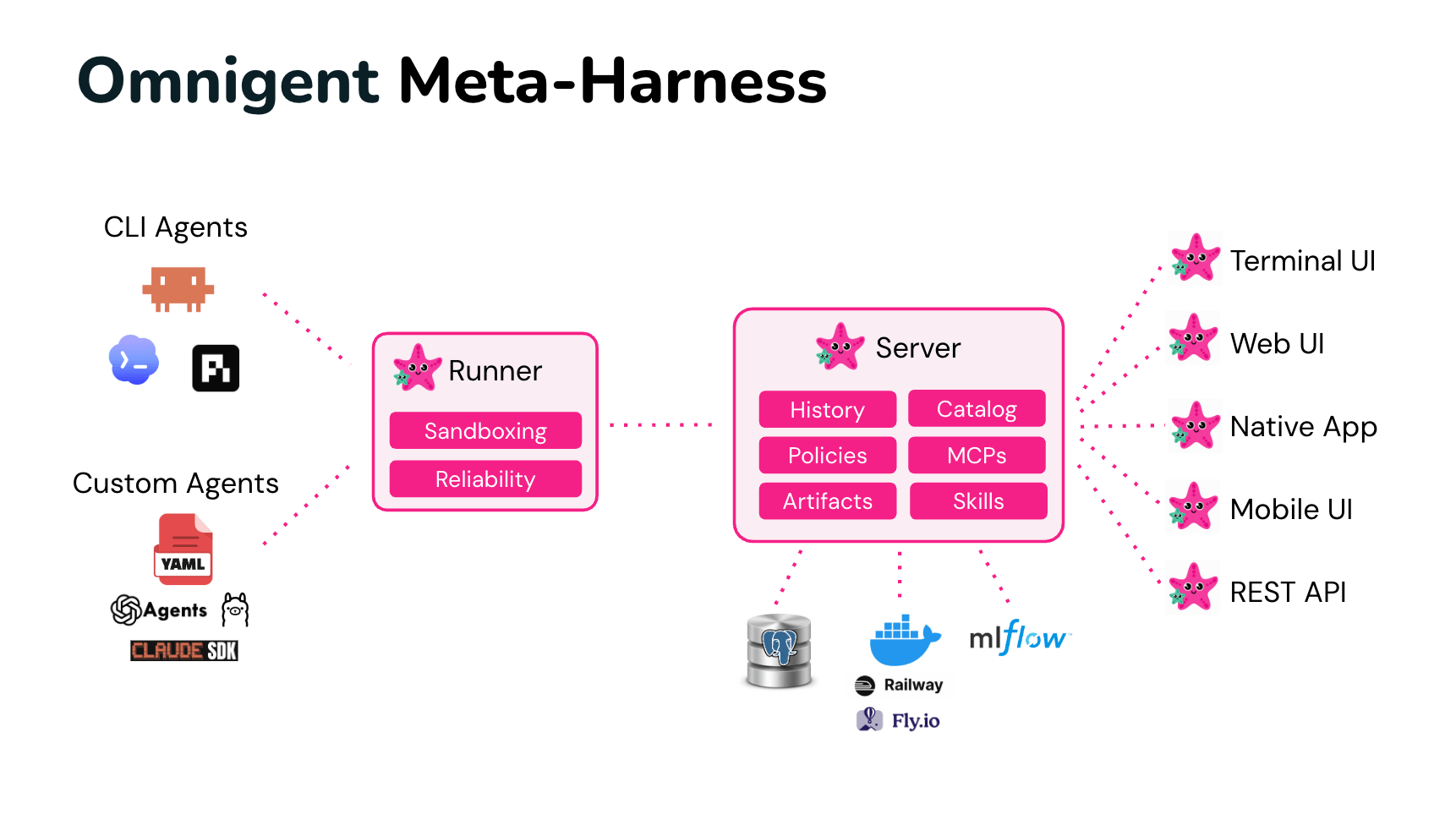
With a working definition of meta-harnesses out of the way, let's dive right into the agent experience by building our own agent and hopefully discovering some of the awesome benefits that IDE-driven agent developement has to offer.
Building an agent from scratch with RocketRide
Booting up the agent builder canvas
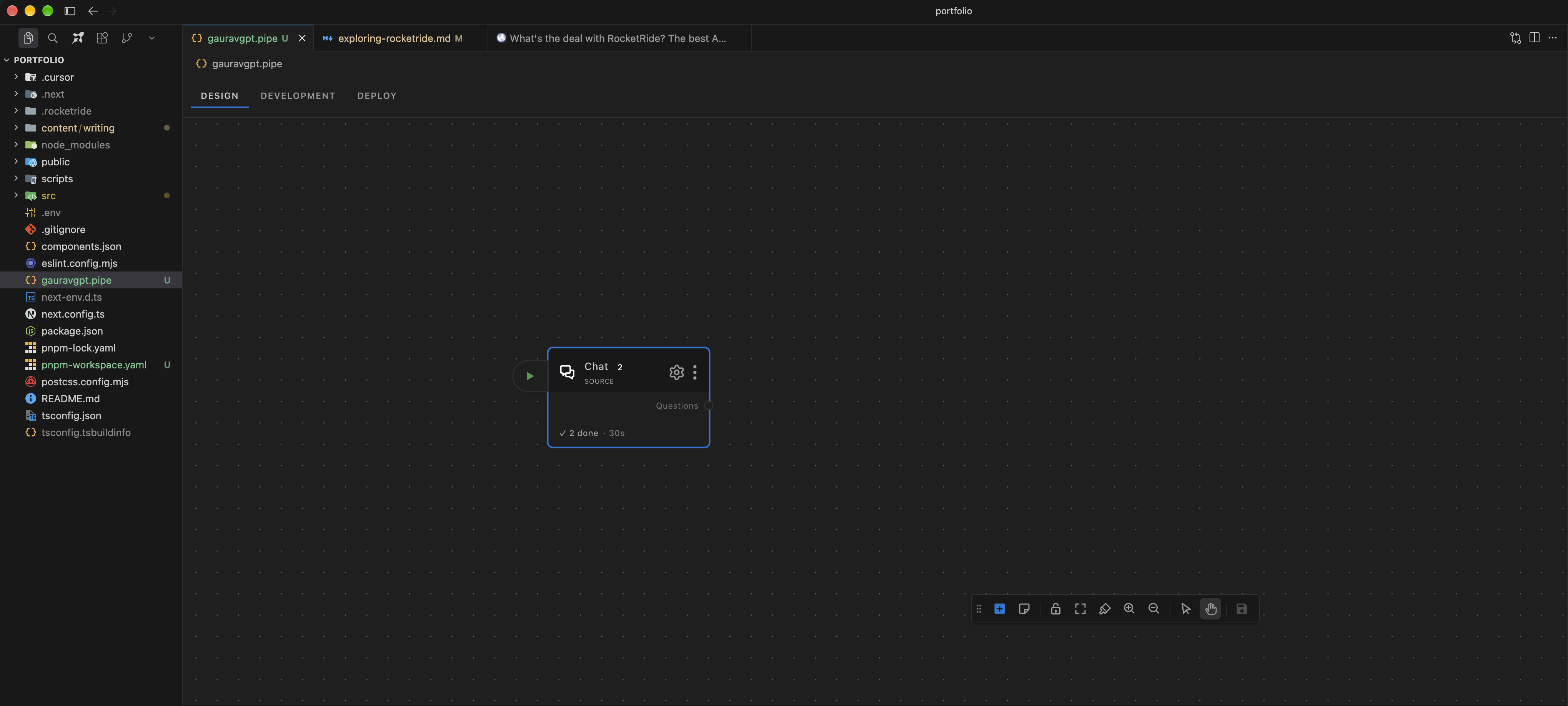
Following the official RocketRide quickstart, I went ahead and installed the RocketRide extension in Cursor. Next, I created a .pipe file, which under the hood is JSON - upon opening the file, the RocketRide extension displays it as a visual builder canvas where users can drag and drop nodes (see below). The agent building experience is reminiscent of n8n, which also features a node-based visual builder canvas - the main differences appear to be that with RocketRide you open the canvas directly in your IDE vs JSON files rather than having to manage a separate browser window. Additionally, while the n8n engine is base on Node.js which is famously single threaded, RocketRide is based on a C++ engine which is multi-threaded and can therefore run parallelize CPU-heavy tasks - which should be incredibly helpful for AI workflows!
Attempting to create a RAG-based Q&A agent (and failing)
For my agent, I will go with a RAG-based Q&A agent for answering any question about myself - the build should be relatively straight forward since I have already indexed all my personal information in a Pinecone DB so all that is left is creating the relevant vector database and LLM nodes. To start off with the LLM node, since RocketRide does not yet have nodes for Vercel AI Gateway or OpenRouter, which is what I would ideally use, I created an Anthropic node and plugged in my API key. Next I used the native Chat UI to test the chat was working - however I got a broken response on my attempts:
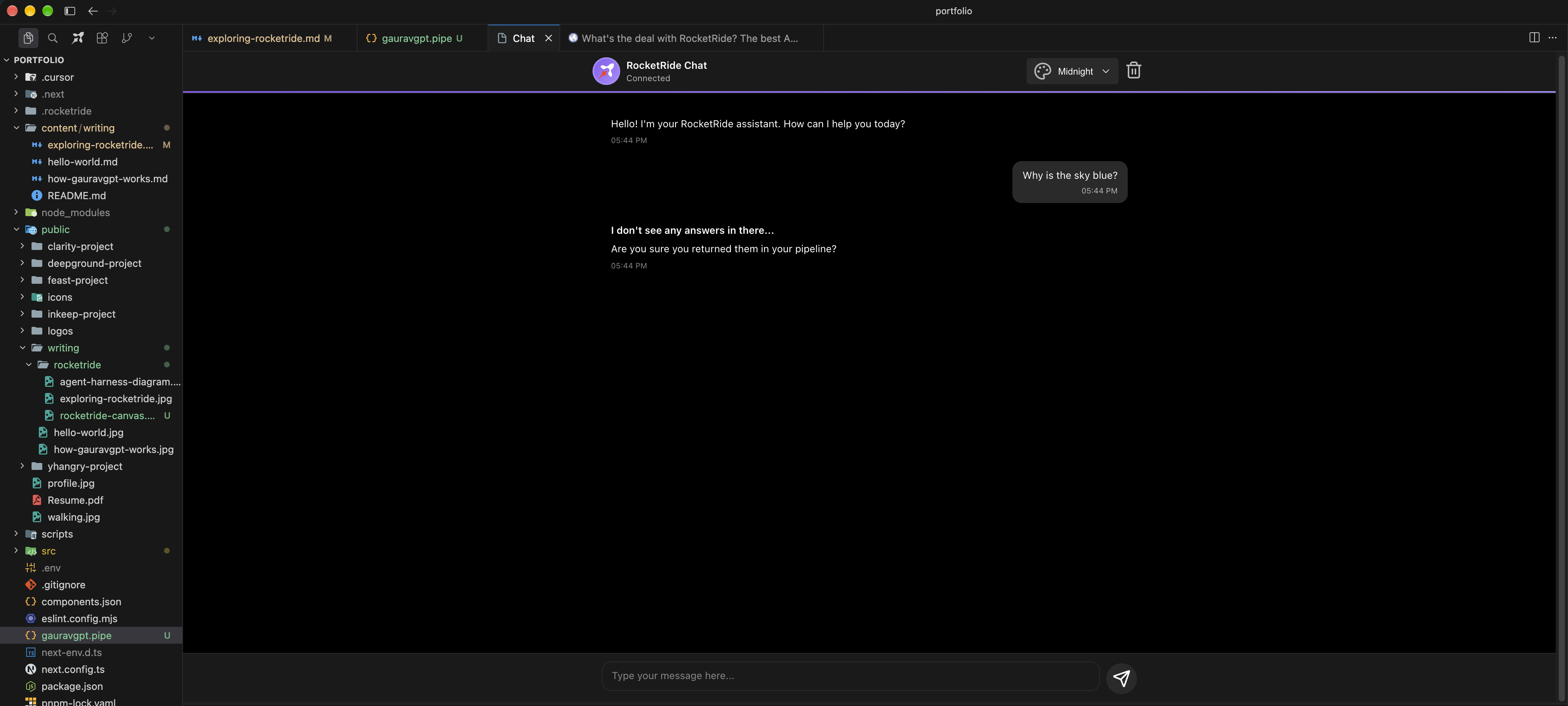
The error output is confusing, given the quickstart said that upon linking the LLM node to the chat node, "the LLM's response routes back to the chat interface automatically." I am not sure if I am missing anything here. Side note: I noticed RocketRide's documentation does not have an AskAI feature, would would be very helpful for cases like these! Additionally, a video tutorial on the quickstart page would also be helpful to make sure I am following all the steps correctly.
At this point, I have reached out to the RocketRide team on Discord and hope to resolve the issue. Until then, consider this section unfinished!
Conclusion
While my test experience with RocketRide quickstart did not go as hoped, I am pleasantly surprised by the paradigm the RocketRide team takes to the agent experience. Not having to manually spin up a local server to run your agents, and instead simply just downloading an IDE extension makes the setup super easy. The IDE-based nature of building agents, i.e. opening up a JSON file and visually defining your agents, is elegant and innovative. Personally, I am not aware of any other agent framework which uses a multithreaded runtime like C++ for their engine, making RocketRide an excellent choice for users who want the best performance for CPU-heavy workflows. Fingers crossed the quickstart issue I ran into can be resolved and I can properly finish my review!